
Stone & Lime
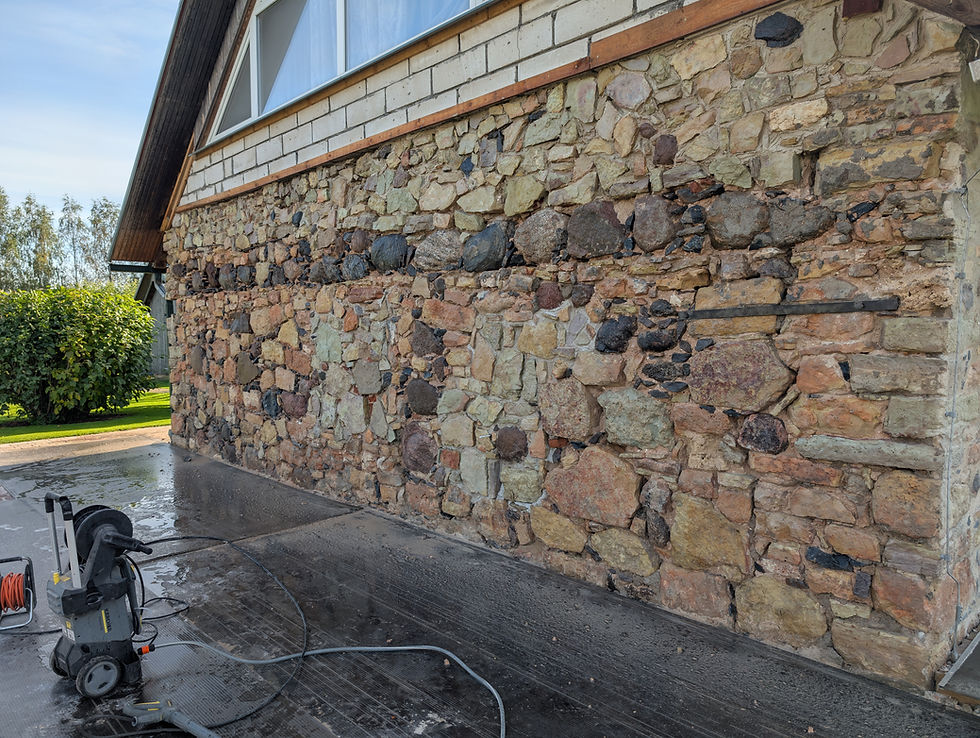

Cement Render Removal & Stone Wall Restoration
One wall of this stone building had been completely concealed beneath a hard cement render, hiding the original masonry and leaving the façade with an appearance very different from the rest of the building. The project focused on carefully removing this later layer and bringing the original stonework back into view.
The Challenge
The cement render was extremely hard and firmly bonded to the wall, making its removal a demanding process. Once exposed, the stonework also required thorough cleaning and preparation before it could be repointed. The challenge was to remove the later materials effectively without causing unnecessary damage to the original masonry beneath.
Our Approach
The cement render was mechanically removed using rotary hammers, after which the masonry joints were thoroughly cleaned. The entire exposed wall was then carefully sandblasted to remove the remaining surface contamination and reveal the stonework more clearly. Once prepared, the masonry was completely repointed with lime mortar and the finished wall thoroughly washed.
The Outcome
With the cement render removed, the original stone masonry once again defines the appearance of the wall. Repointing with lime mortar restored the joints while the final cleaning revealed the natural variation, colour and texture of the stone that had remained hidden beneath the cement finish.
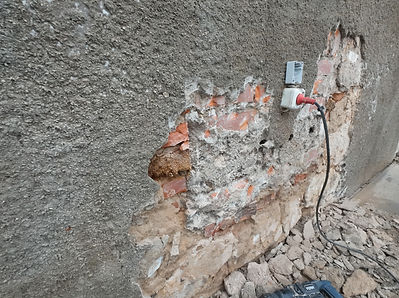
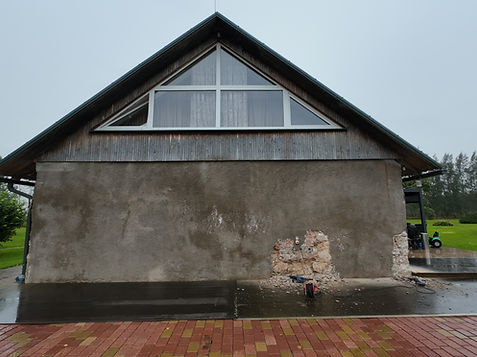


Before the Cement Render Was Removed
These views show the stone wall before work began, completely concealed beneath a thick, extremely hard cement render. The later finish had hidden the original masonry and fundamentally changed the appearance of the façade. Removing it would reveal the condition and character of the stonework that had remained hidden underneath.


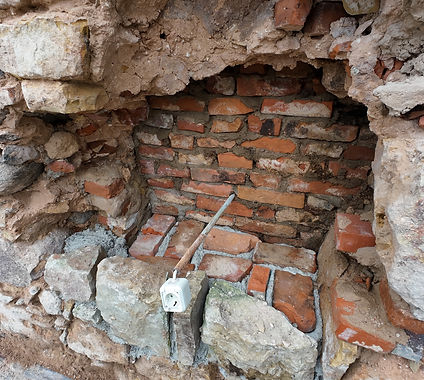
Removing the Cement Render
The hard cement render is progressively removed across the entire wall using rotary hammers, gradually exposing the original stone masonry beneath. Once the render is removed, the joints are also cleared of deteriorated and incompatible material, preparing the complete wall for further cleaning and repointing with lime mortar.

Sandblasting the Exposed Stonework
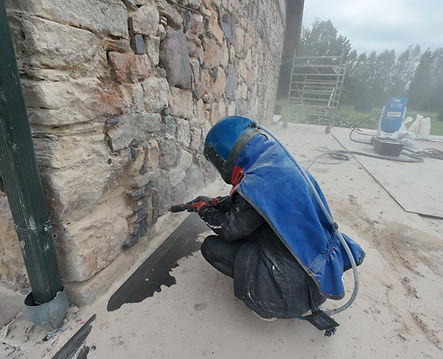
After the cement render has been removed, the entire exposed wall is carefully sandblasted to remove remaining mortar residue and surface contamination from the stonework. This thorough cleaning reveals the natural colour and texture of the stone more clearly and prepares the masonry for the final repointing with lime mortar.


Masonry Prepared for Repointing
With the cement render removed, the joints thoroughly cleaned and the stone surfaces sandblasted, the original masonry is now fully exposed and prepared for repair. This stage also allows the condition of the wall to be clearly assessed before the joints are filled and the entire surface repointed with lime mortar.


The Completed Stone Wall
The completed wall after the cement render was removed, the masonry thoroughly cleaned and the joints repointed with lime mortar. What had been completely hidden is once again exposed: the natural variation, colour and irregular texture of the original stonework now define the appearance of the façade.

Heritage Conservation Insight
Later finishes can sometimes conceal much more than the surface of an old building. Removing an incompatible cement render can reveal original masonry that is still worth preserving, but the work requires careful preparation before any new mortar is applied. Understanding what lies beneath is often the first step towards making the right repair decisions.