
Stone & Lime


Rebuilding a Collapsed Barn Stone Wall
This project involved rebuilding a large section of a barn’s stone wall after the original masonry had collapsed. The work required more than simply replacing the missing wall: the foundation had to be recovered and prepared, the roof structure safely supported, and large quantities of original stone carefully reused during reconstruction.
The Challenge
A substantial section of the barn wall had completely collapsed, leaving the roof structure without proper support and the remaining masonry vulnerable to further movement. The foundation beneath the collapsed section was buried under old mortar, sand and debris, while many of the original stones — including several exceptionally large pieces — had to be recovered and reused.
Our Approach
Before rebuilding could begin, the roof structure was secured and the collapsed section cleared. The foundation was cleaned of old mortar, sand and debris until sound construction was reached, providing a stable starting point for the new masonry. Temporary timber roof supports were replaced with strong steel beams, allowing safe access around the work area and providing additional structural support within the rebuilt wall.
The wall was then reconstructed using original stone wherever possible and lime mortar throughout the masonry work. Both the inner and outer faces were rebuilt together, with larger stones carefully positioned using lifting equipment and, where possible, manually worked into their appropriate positions.
The Outcome
The collapsed section has been fully rebuilt, restoring continuous support to the barn structure and reconnecting the new masonry with the surviving stone walls. Original stone has been returned to the building wherever suitable, including several exceptionally large pieces, while the incorporated steel elements provide additional structural support within the reconstructed wall.

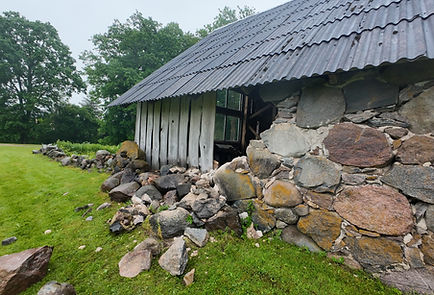
Before Reconstruction
These two views show the barn before reconstruction began. A substantial section of the stone wall had completely collapsed, leaving the roof structure without proper support and exposing the scale of the work ahead. The fallen stone remained around the building, providing valuable original material to be recovered and reused during reconstruction.


Clearing the Collapsed Wall
Before reconstruction can begin, the collapsed section is carefully cleared of debris, loose stone, old mortar and accumulated material. The process continues until the remaining foundation is reached and sound, stable masonry is exposed, providing a reliable starting point from which the stone wall can be rebuilt.


Replacing Temporary Supports with Permanent Steelwork
The temporary timber structures supporting the roof are removed and replaced with substantial steel supports. These provide secure support during reconstruction and are designed to remain permanently within the rebuilt stone wall. Once incorporated into the masonry, the steelwork also provides additional structural strength to the reconstructed section.


Rebuilding the Stone Wall
The wall is gradually rebuilt from the prepared foundation upwards, using recovered original stone and lime mortar. The inner and outer faces of the wall are constructed together, with stones carefully selected and positioned to create stable connections throughout the masonry. Each new section is integrated with the surviving structure around it.
Working with Exceptionally Large Stones
Some of the original stones are exceptionally large and require considerable effort to return to the wall. They are moved and manoeuvred manually before being lifted with a chain block, allowing these heavy stones to be carefully positioned and incorporated back into the reconstructed masonry.

The Completed Barn Stone Wall
The completed wall restores the missing section of the barn and once again provides continuous support to the roof structure. Recovered original stones, including several exceptionally large pieces, have been returned to the masonry, while the permanent steel supports are now incorporated within the rebuilt wall as part of the strengthened structure.


