
Stone & Lime

Historic Cemetery Chapel Stone Foundation Restoration
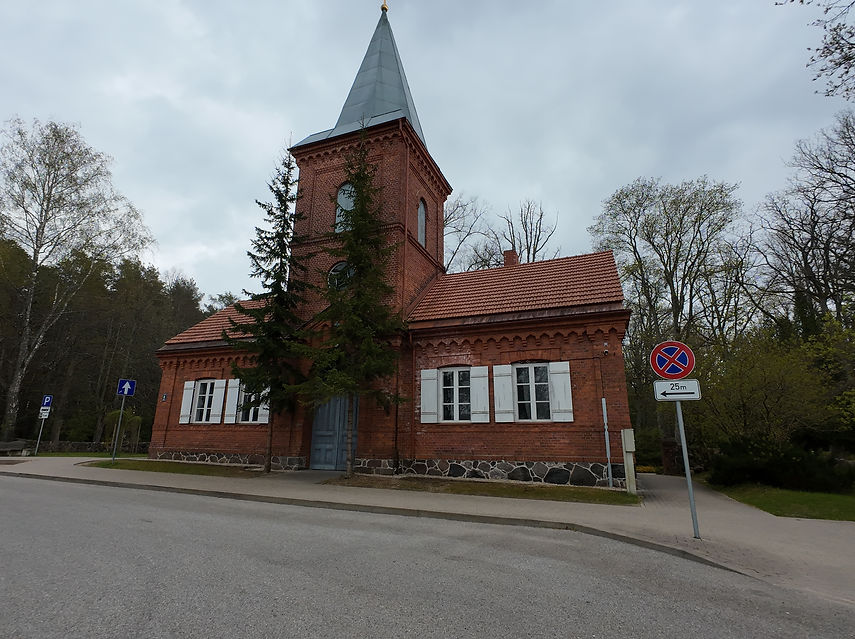
This project focused on the conservation and repair of a stone foundation supporting a cemetery chapel. Years of weather exposure had significantly deteriorated the mortar joints, leaving individual stones poorly supported in several areas. The work was carried out carefully to stabilise the foundation while retaining its original stones and irregular masonry character.
The Challenge
Years of exposure had left sections of the foundation with severely deteriorated or completely missing mortar joints. In several areas, stones were standing almost unsupported, creating a risk of movement and further loss of stability. Open joints also allowed water to penetrate deeper into the masonry, accelerating deterioration of the foundation.
Our Approach
The foundation was carefully exposed where necessary and deteriorated mortar was removed without unnecessarily disturbing the original stones. The masonry was cleaned and prepared before the joints and local defects were repaired using traditional lime-based materials compatible with the historic construction.
The Outcome
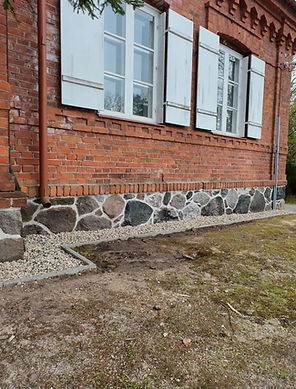
The original stone foundation was preserved and stabilised while maintaining its natural, irregular character. The renewed joints protect the masonry from further weathering while allowing the historic wall construction to remain breathable.
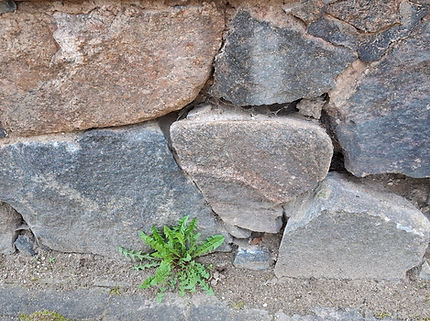

These two pictures views reveal two different problems within the original stone foundation. In some areas, the mortar joints had deteriorated almost completely, leaving deep, open voids between the stones. Elsewhere, previous repairs with incompatible cement mortar had created rigid patches within the otherwise traditional lime-based masonry.

Every Project Begins with Care
Every conservation project begins with attention and care. Before any mortar is replaced or stonework repaired, the existing construction must first be exposed, cleaned and understood. Even the simplest stages of preparation matter, because careful work at the beginning creates the foundation for everything that follows.

Before repointing can begin, loose and deteriorated mortar is carefully removed from the joints. Soil, organic material and other debris are cleared away to expose the sound masonry beneath. Proper preparation is essential, allowing the new lime mortar to be worked sufficiently deep into the existing joints rather than simply covering the surface.

Thoroughly Cleaning the Existing Joints
Deteriorated mortar and compacted material are removed from the joints using appropriate hand and power tools. The joints are cleaned sufficiently deep to reach sound material, while care is taken not to damage the surrounding stones. This thorough preparation provides a stable base for the new lime mortar.
The Completed Stone Foundation
The completed foundation after damaged and incompatible material has been removed and the masonry thoroughly repointed with lime mortar. Deep joints and internal voids have been properly filled, restoring support between the stones while retaining the irregular character of the original masonry. The following views show the finished work around different sections of the chapel foundation.


Heritage Conservation Insight
A deteriorated mortar joint may appear to be only a surface problem, but in traditional stone masonry the mortar also provides support between individual stones. Once joints become deeply eroded or disappear completely, movement within the masonry can gradually develop. Timely repointing with compatible lime mortar can therefore prevent much more extensive structural repairs later.