
Stone & Lime

Stone Façade Renovation
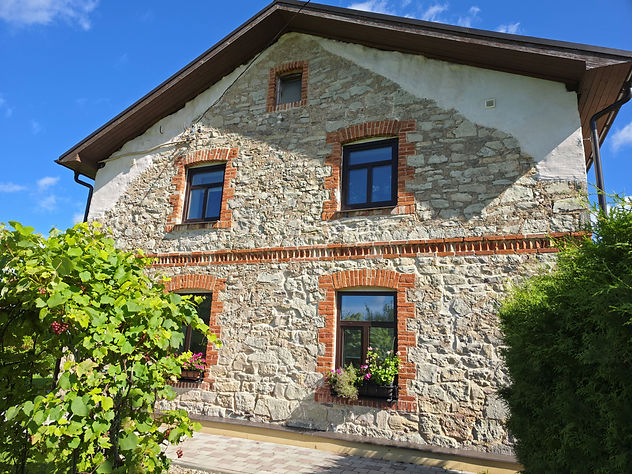
This project focused on the repair of all façades of a traditional dolomite stone building, characterised by brick window openings and decorative brick details. The masonry had deteriorated in numerous areas, requiring careful local repairs while retaining the existing materials and appearance wherever their condition allowed.
The Challenge
The façades showed several forms of deterioration, including cracks, deeply eroded mortar joints and damaged or crumbling bricks around the openings and decorative details. The building had also been raised during an earlier alteration to the roof, leaving a visually prominent band of wood-chip concrete above the original masonry.
Our Approach
Repairs were concentrated on the areas that genuinely required intervention. Cracks were repaired, deteriorated mortar joints were renewed locally, and damaged bricks were carefully replaced where necessary. Rather than repointing all of the sound masonry, the existing joints were retained wherever their condition allowed, in accordance with the client’s wishes.
The exposed wood-chip concrete from the earlier roof alteration was finished with lime rendered, creating a more coherent transition between the original dolomite and brick masonry below and the later construction above.
The Outcome
The repaired façades retain the varied character of the original dolomite and brick masonry while the most deteriorated areas have been stabilised and repaired. Local repointing and brick replacement avoided unnecessary work to sound masonry, while the new lime-rendered upper section gives the later roof alteration a cleaner and more coherent appearance.
Façade Condition Before Repair
The façade before repair, showing deteriorated mortar joints, cracks and damaged areas within the dolomite and brick masonry. The work was planned as a series of targeted repairs rather than complete repointing, retaining existing masonry and mortar joints wherever they remained in satisfactory condition.


A Later Alteration to the Building
The upper section reveals an earlier alteration, when the walls were raised and the roof form changed using a wood-chip concrete construction above the original masonry. Although functional, the exposed concrete sits awkwardly above the dolomite and brick façade and had become one of the main visual issues to address during the project.


Localised Façade Repairs
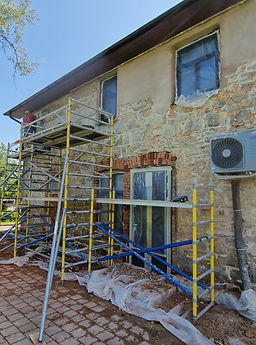
Repairs are concentrated on the areas where deterioration is most pronounced. Cracks are repaired, loose and deteriorated mortar is removed, and damaged bricks are replaced where necessary. Sound masonry and existing mortar joints are retained wherever possible, avoiding unnecessary intervention across sections of the façade that remain in good condition.


The Completed Stone Façade
The completed façades retain the natural variation of the original dolomite and brick masonry rather than presenting a uniformly renewed surface. Damaged areas have been repaired where necessary, while sound existing joints remain untouched. The lime-rendered upper section now provides a cleaner visual transition between the original masonry and the later alteration to the building.


Heritage Conservation Insight
A successful façade repair does not necessarily require every mortar joint or masonry surface to be renewed. Where existing materials remain sound, targeted intervention can preserve more of the building’s original fabric while concentrating the work on areas that genuinely need attention. The result may be less visually uniform, but it reflects the actual condition and history of the masonry.